There are two people who should read this. One just finished a graduate degree and is trying to figure out what their career looks like now. The other is responsible for hiring them.
The answer is different for each, but it starts from the same place.
What AI Actually Does Well
It processes information at a scale no human can match. It drafts, summarizes, codes, translates, and formats. It does not get tired on a Friday afternoon or lose the thread halfway through a long document.
Goldman Sachs received 315,126 applications for its 2024 internship program. Google was already taking in more than three million applications a year by 2019. No team of human recruiters processes that volume. AI can. For tasks with a clear right answer, at scale, with consistency, the model wins.
That is the relevant starting point. The specific tasks that made up a large portion of entry-level work are now faster and cheaper to hand to a model. That is already happening.
If You Just Graduated
Your degree got you in the room. What keeps you there is different from what it was five years ago.
The graduate who tries to compete with AI on AI's terms will lose ground. The one who uses AI to clear the technical floor, and then spends their energy on what the model cannot do, will move ahead.
Here is what a model cannot do.
It cannot read a room. It cannot tell you that the senior person who asked a quiet question in the meeting is actually the one whose approval matters. It cannot navigate the politics of a real organization where two people who are supposed to be collaborating have not spoken directly in months.
It cannot take ownership. When something goes wrong on a project, the model does not stand up and say it missed something and here is what it is doing to fix it. That moment, where a person absorbs accountability and moves the work forward, is what separates the people who get given harder problems from the people who stay on easy ones.
It cannot build trust over time. Trust comes from small, repeated moments of reliability: being the person who follows through, who gives an honest answer when an easier one is available, who remembers what matters to the people they work with. A model can produce the language of reliability. It cannot earn it.
The question to ask yourself is what you can do that the model cannot, and whether you are getting better at it. That is the thing worth investing in.

If You Are Doing the Hiring
The signal that used to be easy to read is harder now.
A polished deliverable no longer tells you much about the person who produced it. It may tell you they are competent at prompting. A clean piece of analysis may have taken four hours or forty minutes. You cannot tell from the output.
What you can still evaluate is everything that happens around the output.
Anthropic has built one of the more rigorous hiring processes in the industry, and the most telling part of it is a standalone values and culture interview that candidates describe as feeling closer to a therapy session than a job interview. Anthropic is testing whether you will hold your actual values under real pressure. The questions include things like: tell me about a technical misjudgment that delayed a project. Tell me about a time something went against your values and what you did. The interview actively rewards honest skepticism over enthusiasm, and candidates who perform conviction they do not have get caught quickly.
That approach is instructive regardless of whether you are hiring for an AI company.
How does this person talk about something they got wrong? Do they describe what happened accurately, or do they smooth it over? Do they say they do not know when they do not know, or do they construct something that sounds plausible? The model always constructs something plausible. The person who says "I don't know, but here is how I would find out" is harder to find than it used to be.
As Megan Lance Flanagan, head of people at Codal, put it: "Technical skills can be tested. Behavior and how someone actually operates within a team is much harder to fake."
What you are looking for now is not technical competence as the primary screen. You can assume a baseline of that. You are looking for whether this person has the judgment, the honesty, and the relational ability to do the parts of the job the model cannot cover.
Those things do not show up in a portfolio. They show up over time, in how someone handles the moments that do not have a correct answer.
That is still the hire.
Sources
- Goldman Sachs's 2024 internship application total of 315,126 comes from figures the firm posted and that were reported widely in mid-2024. Named without a link here because the reporting I could confirm sits in syndication, not on a stable primary page.
- Google's application volume: the confirmed figure is 3.3 million applications in 2019, reported by Axios from Google's own disclosure. No comparable published 2024 number exists, which is why the sentence now carries the 2019 date.
- An earlier version of this post also stated that McKinsey received more than a million applications. That number traces to consulting-preparation sites rather than to McKinsey. The firm's own former global managing partner has put the figure at around 200,000 a year, so the claim has been removed.
- The description of Anthropic's values and culture interview comes from candidate accounts and interview-preparation write-ups, including a Bloomberg Businessweek feature in May 2026, rather than from Anthropic's own published material. Treat it as consistent outside reporting rather than an official account of the process.
- The Megan Lance Flanagan quote, and her title as head of people at Codal, are from Netta Jenkins, Inc., June 12, 2026.
- What a model cannot do, and what that means for a graduate or a hiring manager, is my argument rather than a finding. It draws on twenty-five years of hiring and being hired in finance and technology.
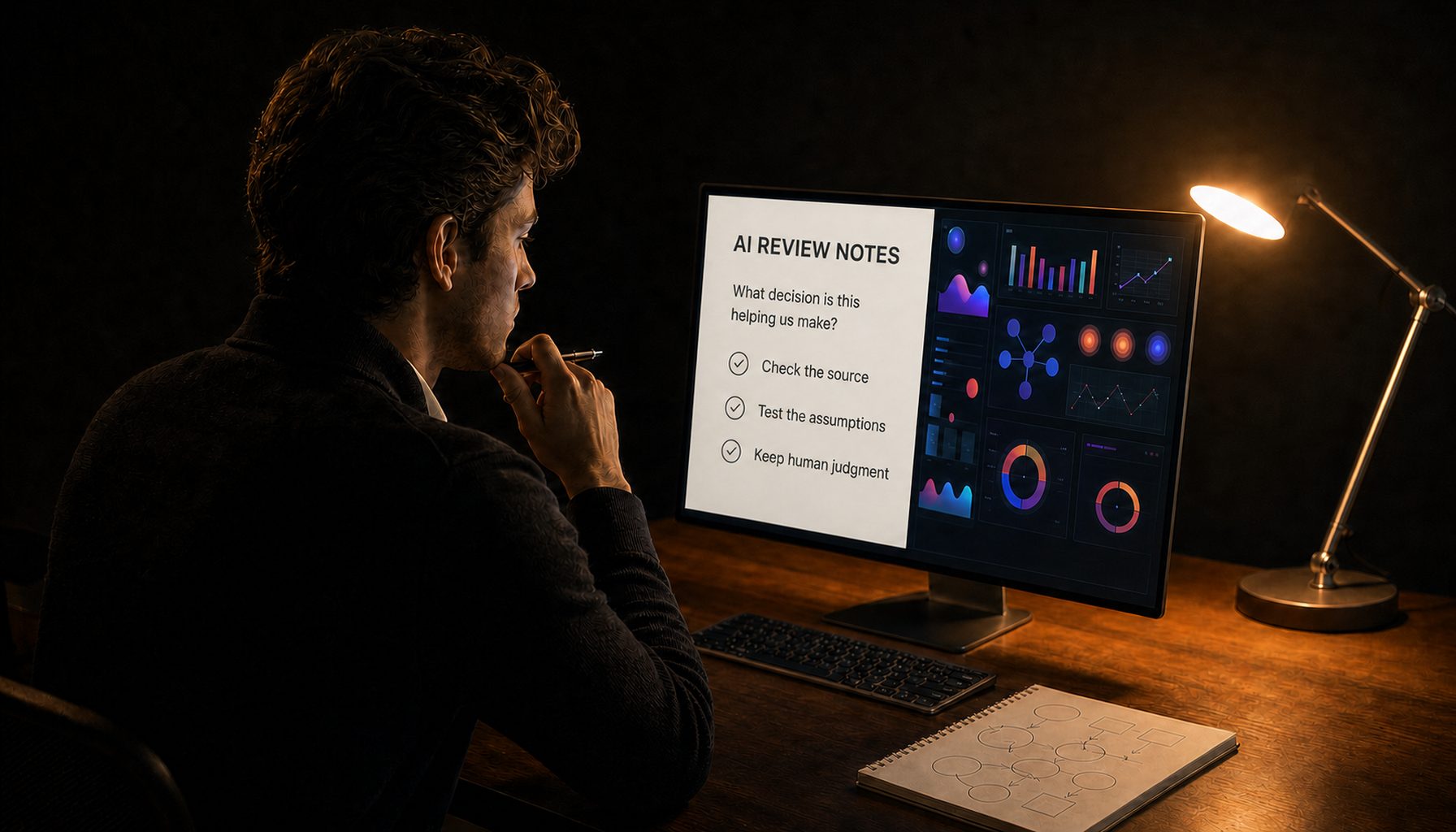
A note on images across this site. Illustrations and workflow diagrams are made with AI, from prompts we write and refine, and we edit most of them afterwards. Screenshots taken in n8n are not, since they show workflows we built in the tool.