I have been collecting fine fragrance seriously for about twenty years. The collection currently stands at over 850 bottles. Every one is documented: house, perfumer, olfactory family, primary notes, acquisition date, price paid, source, and a personal assessment written after wearing it properly over several hours on skin, not on paper.
That database is also one of the most well-structured automation inputs I have ever worked with. The discipline that built it is the same discipline that produces good automation workflows. The parallels were not obvious at first. They became impossible to ignore.
The Schema Problem
Early in my collecting, I kept notes informally. A spreadsheet column here, a notebook entry there, a voice memo that never got transcribed. When I wanted to find all the oud-heavy fragrances in my collection that were appropriate for cooler weather, I had to search across multiple sources and still could not be certain I had found everything.
The fix was obvious in retrospect and took longer than it should have: define the schema first, then populate it consistently. Every bottle gets the same fields, filled out the same way, using the same vocabulary. Oud is always "oud", not "agarwood" in some entries and "oud accord" in others. The house is always formatted the same way. The assessment always follows the same structure: opening, development, dry-down, longevity, projection, overall verdict.
The value of the database comes from its completeness and consistency, not from any individual entry. One brilliantly written assessment of a single fragrance is interesting. 850 consistently formatted assessments that can be queried, filtered, and cross-referenced are a tool.
Automation systems have exactly the same dependency. A workflow that triggers on an email arrival is only as useful as the rules that categorise that email consistently. A data pipeline is only as reliable as the schema it writes to. Inconsistent inputs produce inconsistent outputs regardless of how elegant the logic in between. Getting the schema right before building the automation is the same discipline as getting the fragrance notes vocabulary standardised before populating the database.
Patience as Infrastructure
Fine fragrance cannot be properly evaluated in five minutes. The top notes, what you smell immediately on application, are often the least representative part of the composition. They are the most volatile molecules, designed to grab attention and then step aside. The heart of the fragrance develops over the first thirty to sixty minutes. The base, the materials that remain after several hours on skin, is the true character of the composition. It is what you will actually smell for most of the day.
Most people evaluate a fragrance in a department store on a strip of paper for thirty seconds. They are smelling the top notes in a compressed, context-free environment. They are missing the point entirely. A fragrance that opens beautifully and dries down to something disappointing is a fragrance I would not wear. A fragrance that opens unremarkably and develops into something extraordinary is one of the most rewarding discoveries in collecting.
Automation has an equivalent evaluation problem. Most business owners assess a workflow in the first week of operation, when it is handling the normal cases cleanly and the results are exactly what was expected. The real test comes at six weeks, when the edge cases start appearing: the client who submits the same form twice, the invoice with an unusual line item that does not match the expected format, the email that matches two categories simultaneously, the API response that comes back in a different format than it did last month.
A workflow that has not been observed through its edge cases has not been properly evaluated. The patience required to run a workflow through its full range of real-world inputs before declaring it production-ready is the same patience required to understand what a fragrance actually smells like. The first impression is rarely the complete picture.
Restraint as a Design Principle
The most interesting fragrances in my collection are almost never the ones that try to do everything at once. A composition with thirty declared notes that fights for attention at every stage tends to resolve into a kind of noise: technically impressive, perhaps, but exhausting to wear and difficult to remember. The fragrances I reach for most often are the focused ones. They know what they are. They commit to it. They do not try to be everything.
The automation equivalent is scope creep. A workflow that starts as "send a follow-up after a job is complete" gradually accumulates conditions, branches, and special cases until it is doing fifteen things and doing all of them unreliably. "But what if the client is a VIP? What if the job was a warranty repair? What if the invoice is still unpaid? What if they already left a review?" Each addition makes sense in isolation. Together, they make the workflow brittle and hard to maintain.
The discipline is the same in both domains: identify the one thing you are trying to achieve, and cut everything that does not serve it. Additional cases belong in additional workflows, not as branches in a single workflow that was designed around a different core purpose. A workflow that does one thing reliably is more valuable than one that tries to do everything and breaks under edge-case pressure.
Documentation as a Form of Respect
Every assessment in the fragrance database is written to be useful to a future reader who has no memory of the original wearing session. The date, the context, the weather, the occasion, the initial impression, the development, the conclusion. If I come back to a fragrance three years later and want to understand why I assessed it the way I did, the entry should tell me.
Workflow documentation deserves the same respect. A workflow built without documentation is a black box. It works until it does not, and when it stops working, the person responsible for fixing it has to reverse-engineer what it was supposed to do from what it is actually doing. That is a slow and expensive process.
Document every workflow at the time it is built: what triggers it, what it does at each step, what the expected output is, what the error handling logic is, and what constitutes a successful run. That documentation is the equivalent of the assessment notes. It is not for the moment you build the workflow. It is for the moment, six months later, when something changes and you need to understand exactly how the system was designed.
The System That Came From the Collection
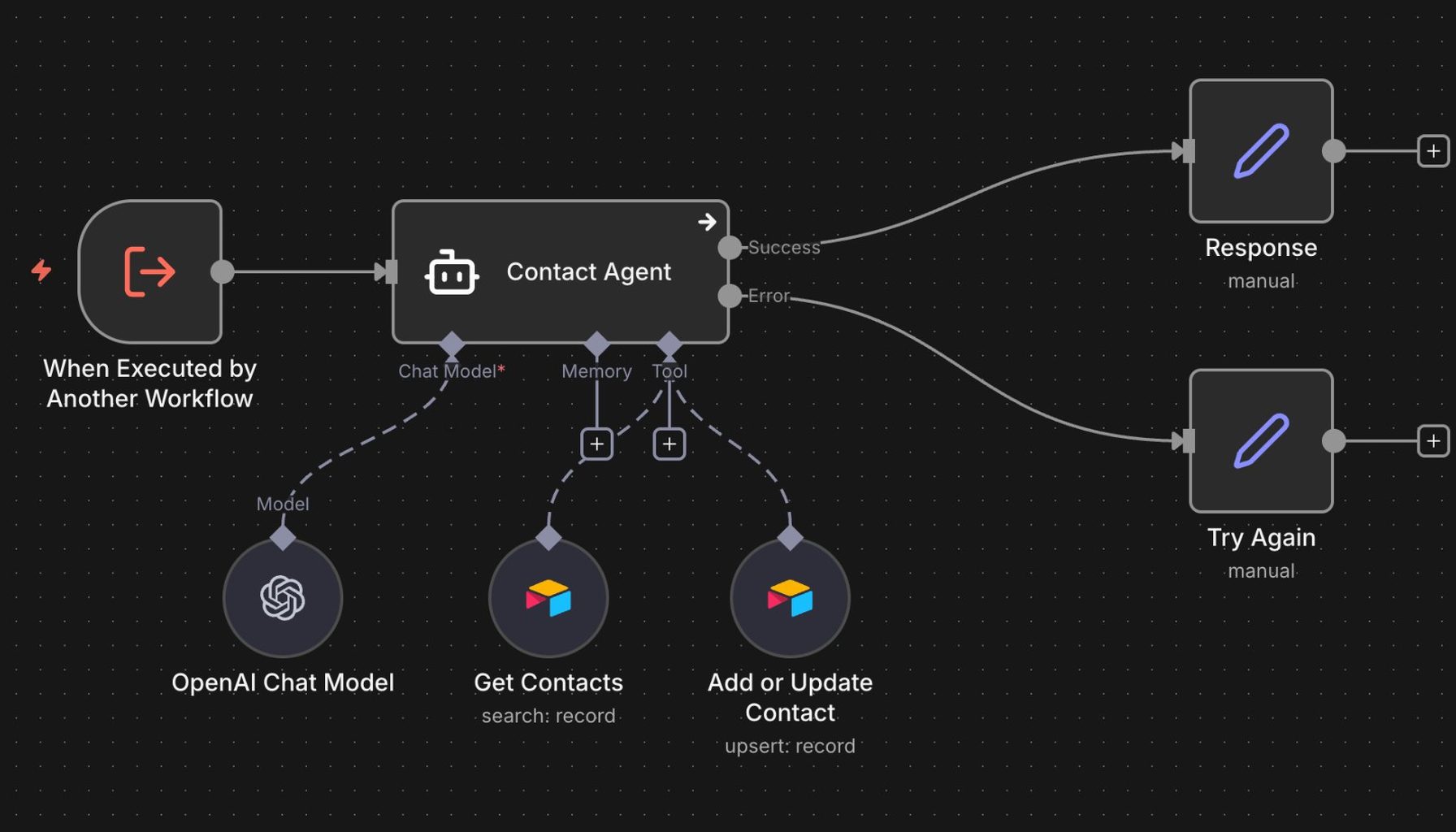
The 850+-bottle database now runs a weekly content automation that draws from it to generate post ideas for The Society of Scents and Spirits. The system looks at what has not been covered recently, what is seasonally appropriate, and what has driven engagement in the past. It delivers a formatted batch of ideas every Monday morning, including caption angles, content formats, and hashtag clusters.
It took roughly twenty years to build the underlying knowledge that makes those suggestions useful. The automation itself took a weekend to build. The value was always in the structure and consistency of the data, not in the tool. The tool just makes the data useful at a scale and speed that would not be possible manually.
That ratio, years of careful documentation producing an automation that runs in seconds, is not unusual. The patience and discipline that goes into building a reliable data foundation consistently produces outsized returns when automation is applied on top of it. If you want to talk about what that could look like for your business, the conversation starts with what you already have and what it would take to make it useful at scale.
The Vocabulary Problem
In fragrance, the vocabulary problem is one of the first things a serious collector confronts. The language for describing scent is borrowed from other sensory domains and applied inconsistently. "Woody" can mean the dry, pencil-shaving quality of cedarwood or the warm, almost vanillic quality of sandalwood. "Musky" covers everything from clean laundry to animal skin depending on the writer. "Aquatic" has been used to describe fragrances with almost nothing in common.
The solution is to build your own controlled vocabulary and apply it consistently, even if it departs from industry convention. In the database, "woody" means a specific quality: dry, linear, and linear. If a fragrance has a warm, creamy wood character, it is listed as "creamy woods" rather than just "woody." The distinction matters because the database is only useful for finding what you want if the terms mean the same thing every time they appear.
Data systems have exactly the same problem. "Completed" in one part of your workflow might mean the job is done and invoiced. In another part of the same system, it might mean the job is done but payment is pending. "Active client" might mean a client with an open project, or a client who has booked in the last 12 months, or a client who is on a retainer. If your vocabulary is not controlled and consistent, queries against your data produce unreliable results and automations built on that data behave unpredictably.
The fix is the same in both domains. Define your vocabulary before you start populating your system. Write down what each key term means in your specific context. Enforce that meaning consistently across every entry point: every form, every integration, every manual update. When the meaning needs to change because the business has evolved, update the definition and audit the existing records. The vocabulary is infrastructure. It deserves the same maintenance attention as any other part of the system.