Large companies have had automation for decades. They have IT departments, enterprise software budgets, and operations teams dedicated to building and maintaining systems. Small businesses have historically done everything manually, because the tools were too expensive, too complicated, or both. That has changed. AI-powered automation is no longer a large-company advantage. It is available to any business willing to set it up, at a fraction of the cost it took even five years ago.
The Time Problem Is Real, and Most Owners Do Not Measure It
Small business owners work more hours than almost anyone. A significant portion of those hours go to tasks that generate no new value: answering the same questions, sending the same follow-ups, updating the same records, reformatting the same data. These tasks are necessary. They are also exactly the kind of work that automation handles best.
The question is not whether automation could save you time. It is whether the time saved justifies the investment to set it up. For most businesses, the answer becomes obvious once you actually count the hours. An owner spending three hours a week on email management is spending over 150 hours a year on it. That is nearly four full work weeks. At a conservative $75 effective hourly rate, that is $11,250 of owner time spent on tasks that a well-designed system could handle automatically.
Most owners absorb this cost without naming it. It shows up as long days and a persistent feeling of never catching up. It does not appear as a line item on a financial statement, which is why it tends not to get addressed.
You Do Not Need a Developer, But You Do Need Good Design
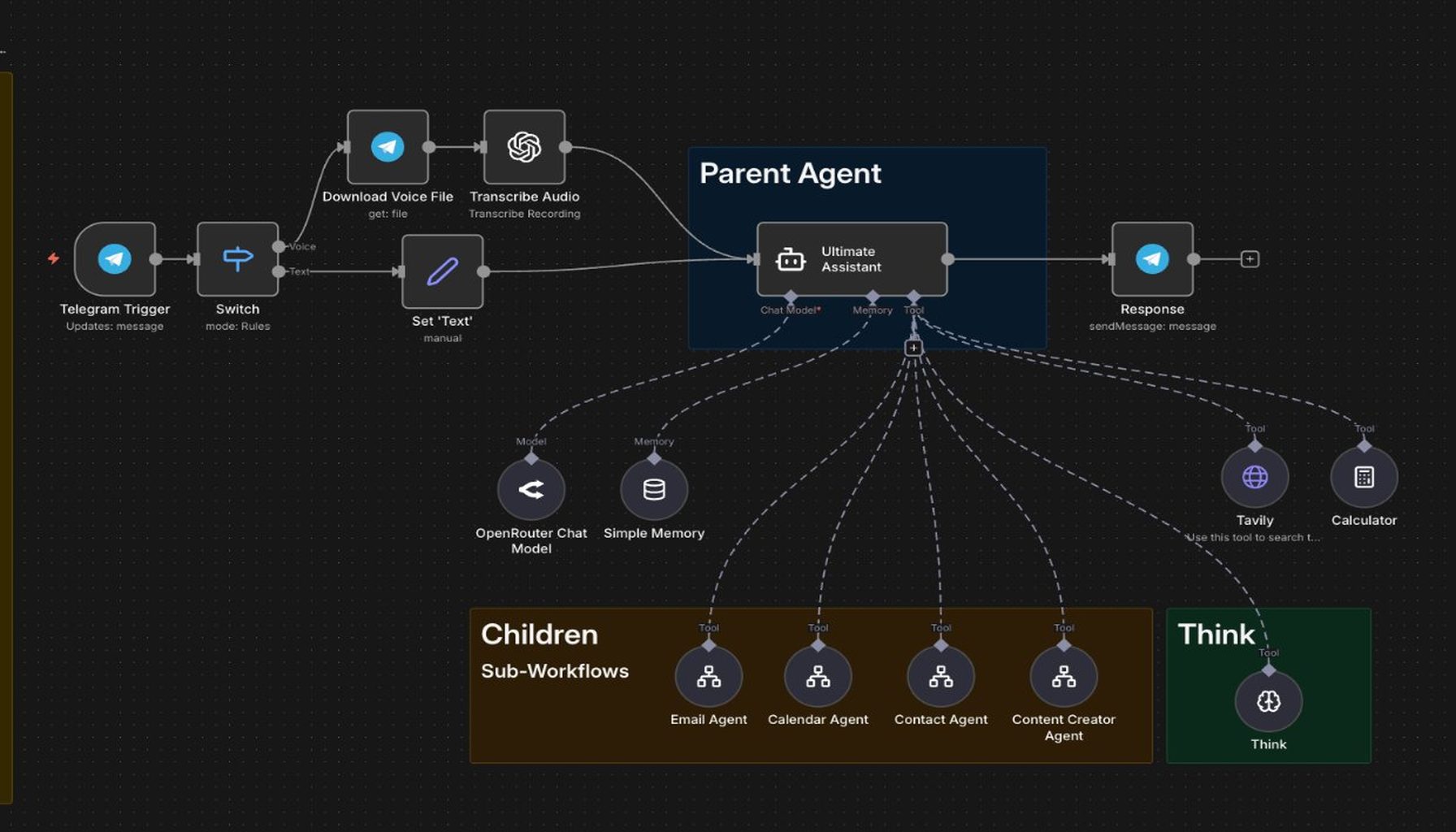
The most common reason small businesses have not automated is the assumption that it requires technical expertise they do not have. Modern automation platforms, including N8N, Zapier, and AI-powered workflow tools, are built to be configured rather than coded. The logic is visual. Connections to common software like Gmail, Shopify, QuickBooks, and most CRM systems are pre-built and require no programming knowledge to set up.
What requires expertise is knowing how to design a workflow that handles edge cases reliably, fails gracefully when something unexpected happens, and scales as your volume grows. That is the part most owners cannot do themselves without spending significant time learning the platforms. And time spent learning automation tools is time not spent running the business.
The value I provide at Agent Micho is not access to the tools. The tools are accessible to anyone. The value is in designing workflows correctly from the start, so they run without intervention and do not create new problems when something unusual happens.
The Competitive Effect Compounds Over Time
When a small business automates its follow-ups, it responds to every completed job within hours instead of days. When it automates invoicing, it gets paid faster. When it automates its content scheduling, it maintains a consistent presence without the weekly effort. These are not dramatic individual advantages. Compounded across a year, they produce a meaningfully different operation.
Consider two businesses in the same industry, comparable in quality and price. One follows up with every client within 24 hours of job completion. The other follows up when someone remembers to, which means inconsistently, and sometimes not at all. The first business has a measurably higher retention rate. It generates more reviews. It gets more referrals. None of that came from being better at the actual work. It came from being more consistent at the things that happen around the work.
The same principle applies to lead response. Businesses that respond to new enquiries within five minutes are roughly 21 times more likely to qualify that lead than businesses that respond within 30 minutes. Most small businesses cannot physically respond within five minutes during a busy work day. An automated acknowledgment can, every time.
The Objections Worth Taking Seriously
The most legitimate objection to automation for small businesses is that it can feel impersonal. A client who receives an obviously templated message after a job may feel processed rather than valued. This concern is real and it is addressable.
The solution is in the template design. An automated follow-up written in the business owner's actual voice, referencing the specific job, sent at a timing that makes sense, does not feel automated. What feels automated is a generic message with a first-name merge field and corporate language. The automation is not the problem. The template is.
I saw this directly when building the inbox triage system for The Society of Scents and Spirits. The auto-replies were written to match the platform's voice, warm but not familiar, knowledgeable but not academic. The response from recipients was consistently positive. Nobody asked whether a human had written the message. They just felt acknowledged quickly, which is what the interaction was supposed to accomplish.
The second objection is cost. Automation has a build cost, and for a very small business doing low volume, the payback period might be longer than expected. The answer is to start with the highest-volume, highest-friction task, not the most interesting one. One workflow that saves five hours a week pays for itself quickly. A suite of sophisticated automations built before the business has the volume to justify them does not.
Where to Start
The right first automation is the task you did manually three times this week that felt like something a computer should handle. That instinct is almost always correct. The task follows a predictable pattern. It happens frequently. Getting it wrong has consequences. Those are the three conditions that make a task worth automating.
If you are spending time on tasks that follow a pattern, there is a good chance I can automate them. Start the conversation here and I will tell you honestly whether automation makes sense for what you are dealing with, and what it would cost to build.
The ROI Case in Plain Numbers
Abstract arguments about efficiency and competitive advantage are useful framing, but the case for automation for most small businesses comes down to a straightforward financial calculation. Here is how to run it for your own situation.
Start by listing the three tasks that consume the most of your time each week. Be specific: not "admin" but "entering new client details into the CRM," not "communication" but "sending follow-up emails after jobs are complete." Estimate the time each task takes per week, being honest rather than optimistic. Most owners underestimate by 30 to 50 percent when they first do this exercise.
Multiply the weekly hours by your effective hourly rate. If you charge $100 per hour for your actual work, that is the rate to use. If you would rather not bill that time, use a conservative estimate of $50. Multiply by 50 working weeks. That number is the annual cost of doing that task manually.
Compare it to the cost of automating the task: typically a one-time build cost of $500 to $3,500 depending on complexity, plus a monthly support and maintenance cost of $100 to $500. The break-even point for most implementations is between four weeks and three months. After that, every week is pure recovery of time that can go into billable work, business development, or simply not working evenings.
The businesses that do not automate are not making a neutral choice. They are choosing to pay the cost of manual processes indefinitely, in time and in the errors and inconsistencies that manual processes produce. The question is not whether automation pays for itself. For the right tasks, it almost always does. The question is which tasks to automate first.
The businesses that adopt automation now are not doing anything exotic. They are doing the same things they have always done, just without the manual overhead. The follow-up happens. The invoice goes out. The data is current. The response arrives in seconds rather than hours. Compounded across a year, those improvements produce a meaningfully different operation: one that runs more reliably, serves clients more consistently, and frees the owner to focus on the work that actually requires them.
The final reason small businesses should take automation seriously is not competitive pressure or cost savings, though both are real. It is quality of work. An owner who is not spending three hours a day on administrative tasks has more to give to the actual work. More attention, more creativity, more presence in client conversations. The automation does not make the work better. It removes the drag that prevents the work from being as good as it should be.
Start with the highest-volume, highest-friction task you do manually every week. Document it clearly. Build a system that handles it. Measure what changes. That is the entire process. The rest is details that are easier to work through once you are building something real rather than planning in the abstract. The businesses that benefit most from automation are not the ones that planned the most carefully before starting. They are the ones that started with something specific and built from there.